Korean Bulgogi Rice Bowls
Sweet and savory marinated beef sizzled in a hot pan and piled over rice with kimchi, pickled cucumbers, and a runny fried egg.
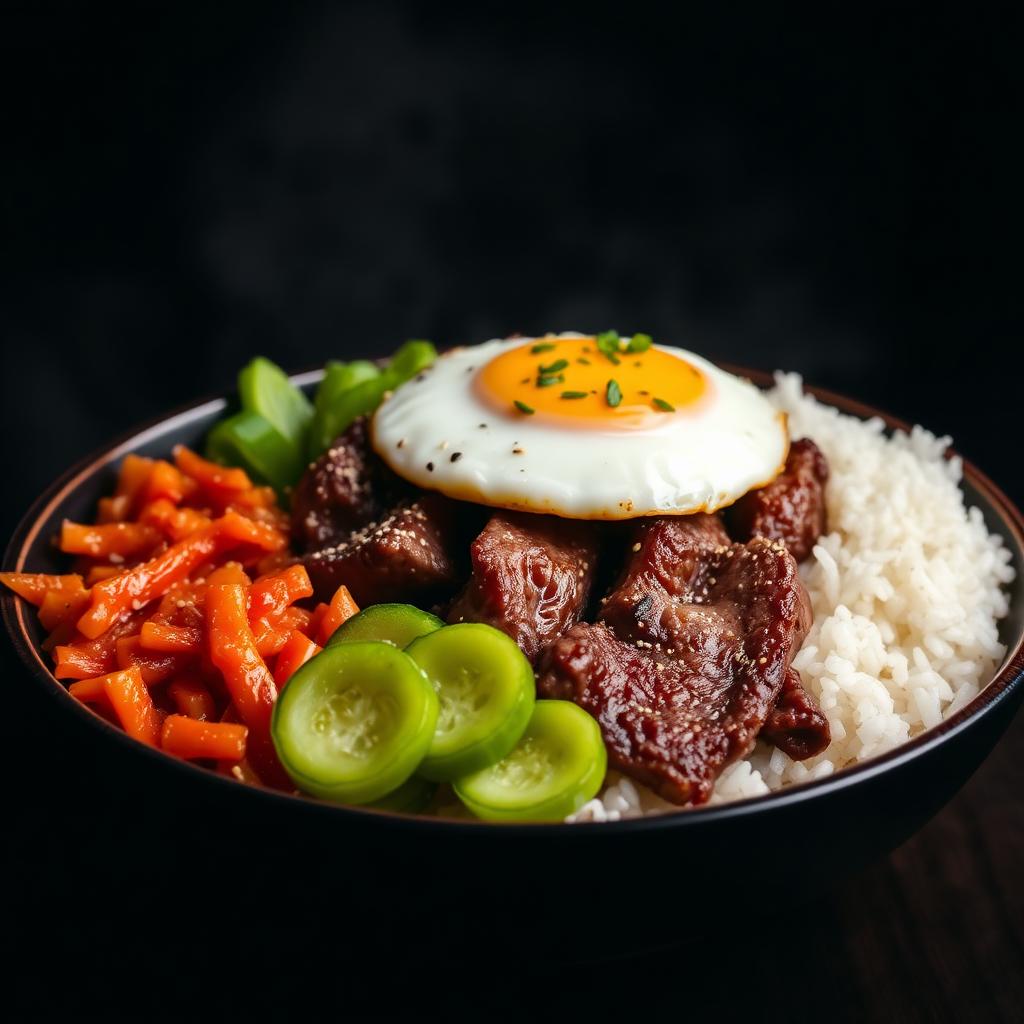
Bulgogi is the Korean dish that taught me what beef can taste like when you treat it with respect. Thinly sliced ribeye is marinated in a sweet and savory blend of soy sauce, pear, garlic, and sesame oil until it is practically candied with flavor, then seared in a screaming hot pan in just a couple of minutes. The result is tender, deeply savory, glossy strips of beef that pair beautifully with steamed rice, crunchy pickled vegetables, and the ultimate finishing touch — a perfect fried egg with a jammy yolk that runs everywhere once you break it.
My first taste of bulgogi was in a tiny Korean barbecue restaurant in Queens, where the owner spoke almost no English and the menu was entirely handwritten on a chalkboard. I had no idea what I was ordering. The waitress brought out a sizzling cast-iron platter of glistening, caramelized beef strips and gestured for me to wrap them in lettuce leaves with a smear of gochujang and a few shreds of pickled radish. I built my first lettuce wrap nervously, took a bite, and immediately decided I would dedicate a portion of my remaining life to figuring out how to make this at home.
The key to good bulgogi, I have since learned through many failed attempts and one extremely helpful conversation with the owner of a Korean grocery store, is the marinade. And the secret ingredient in the marinade is — wait for it — Asian pear. Yes, pear. A grated Asian pear has natural enzymes that tenderize the beef and bring this subtle, almost floral sweetness that balances the salty soy and umami garlic. If you cannot find an Asian pear, a regular Bartlett or even a small apple will do the trick. But seek out the Asian pear if you can. It makes a real difference.
The second secret is the cut and slice of the beef. You want a well-marbled cut — ribeye is traditional and worth the splurge, but sirloin works too — and you want it sliced paper-thin against the grain. The easiest way to do this at home is to put the beef in the freezer for 30-45 minutes until it is partially frozen and firm, then slice with a very sharp knife. Thin slices marinate quickly and cook in seconds, which is exactly what you want.
The third secret is the heat. Bulgogi needs a hot, almost dangerously hot pan. Cast iron is ideal. You want the beef to hit the pan, sizzle violently, and caramelize on the edges in about 90 seconds. Do not crowd the pan or you will steam the meat instead of searing it. Cook in two or three batches if you need to, and let the pan come back up to temperature between batches.
I serve mine over short-grain rice — the slightly sticky, almost glossy kind — with whatever quick-pickled vegetables I have on hand and a fried egg cooked sunny-side up with crispy lacy edges. The yolk runs into the rice, mingles with the bulgogi juices, and creates this deeply savory sauce at the bottom of the bowl that you will absolutely scrape clean with your spoon. My husband, who once claimed he was 'not a big rice person,' has rated this one of his all-time favorite meals. I have made it for friends with mixed dietary restrictions and watched the bowls disappear. Even my notoriously picky niece, who eats approximately seven foods, ate two helpings.
What you'll need
- 011.5 lbs ribeye or sirloin steak, very thinly sliced against the grain
- 021 small Asian pear, peeled and grated (or 1 small apple)
- 031/3 cup soy sauce
- 043 tablespoons brown sugar
- 052 tablespoons toasted sesame oil
- 065 cloves garlic, minced
- 071 tablespoon fresh ginger, grated
- 083 scallions, sliced (white and green parts separated)
- 091 tablespoon mirin or rice vinegar
- 101/2 teaspoon black pepper
- 112 tablespoons neutral oil, for cooking
- 124 cups cooked short-grain rice, warm
- 134 large eggs
- 141 cup kimchi
- 151 cup quick-pickled cucumbers (see tips)
- 161 tablespoon toasted sesame seeds
- 17Gochujang or sriracha, for serving
How to make it
- 1
Place the beef in the freezer for 30 minutes before slicing for easier paper-thin cuts.
- 2
In a large bowl, whisk together the grated pear, soy sauce, brown sugar, sesame oil, garlic, ginger, white parts of the scallions, mirin, and black pepper.
- 3
Add the sliced beef and toss to coat. Marinate at room temperature for 30 minutes, or in the fridge for up to 8 hours.
- 4
Heat a large cast-iron skillet over high heat until smoking. Add 1 tablespoon neutral oil.
- 5
Working in batches, add the beef in a single layer and sear for 60-90 seconds, then flip and cook another 30-60 seconds until caramelized at the edges.
- 6
Transfer to a plate and repeat with the remaining beef, adding more oil as needed.
- 7
In a separate skillet, fry the eggs sunny-side up over medium-high heat until the whites are set and the yolks are still runny, about 3 minutes.
- 8
Divide the warm rice among 4 deep bowls.
- 9
Top each bowl with bulgogi, a scoop of kimchi, pickled cucumbers, and a fried egg.
- 10
Sprinkle with the green parts of the scallions and toasted sesame seeds.
- 11
Serve immediately with gochujang on the side.
Tips from the kitchen
- 01
Quick pickled cucumbers: thinly slice 1 cucumber, toss with 1 tablespoon rice vinegar, 1 teaspoon sugar, 1/2 teaspoon salt, and a pinch of red pepper flakes. Let sit 15 minutes.
- 02
Partially freeze the beef before slicing for paper-thin pieces.
- 03
Cast iron or carbon steel pans give the best sear. Cook in batches to avoid steaming the meat.
- 04
Asian pear is the traditional tenderizer — kiwi or apple work in a pinch.
- 05
Marinade can be made up to 24 hours ahead. The beef can sit in it overnight for deeper flavor.
- 06
Leftover beef makes incredible lettuce wraps, tacos, or breakfast hash the next day.
Frequently asked
What if I can't find Asian pear?
A grated apple or kiwi works similarly. Both contain enzymes that tenderize beef.
Can I use a different cut of meat?
Ribeye, sirloin, or flank steak all work well. Avoid lean cuts like tenderloin — bulgogi needs fat.
Is this gluten-free?
Use tamari instead of soy sauce and confirm your gochujang is GF-certified. The rest of the ingredients are naturally gluten-free.
Can I cook bulgogi on a grill?
Yes, especially with a grill basket. Cook over high heat for 1-2 minutes per side.
How spicy is this?
The base recipe is not spicy at all — the heat comes from the gochujang served on the side. Customize per bowl.